

To be honest, the fitness world loves to complicate everything. Flashy advertisements about fitness leave people confused and disengaged and it is only natural to feel overwhelmed amidst it all.Having written about health and wellness for a long time, I would like to share that long-term fitness does not depend on strenuous exercises or complex routines; small, everyday habits can help keep you active and fit.
Why Should Be Fit and active be important?
By nature, humans are creatures designed for movement. Thousands of years ago, they engaged in physical exertion to survive; however, in today’s digital jobs, physical labor is negligible.
There is an old saying: “Health is the root of all happiness.” Good physical and mental health is our most valuable asset, far surpassing any material wealth. Without it, achieving success and enjoying the simple pleasures of daily life become impossible. Maintaining this invaluable foundation requires consistent daily habits, such as a balanced diet and regular exercise.
The Core Framework: Understanding Fitness Principles
To build a healthy body, you need to understand the fundamental frameworks of physical culture. Let us discuss in detail the principles and pillars that govern true physical well-being.
The 4 Principles of Fitness:
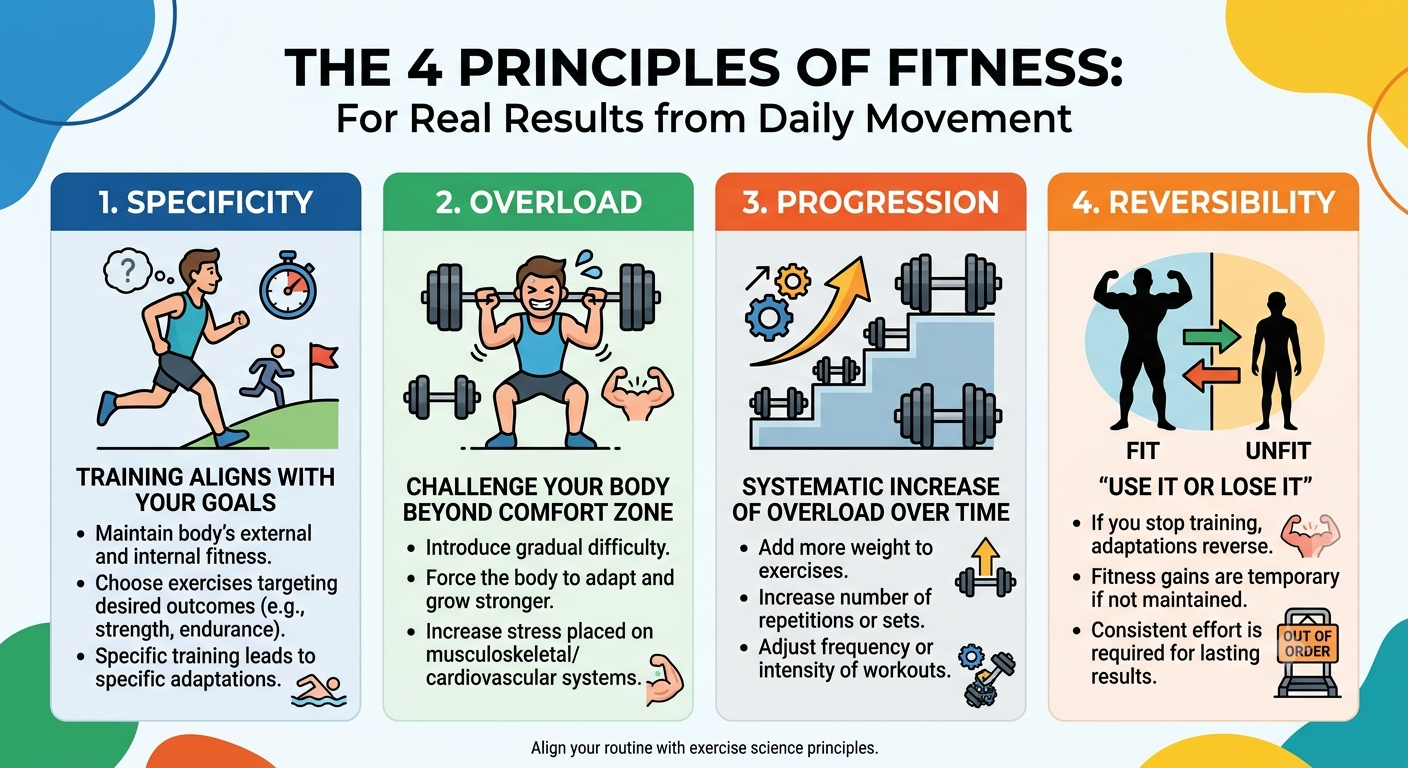
If you want your daily movement to yield real results, your routine should align with the four core principles of exercise science:
Specificity: To maintain your body’s external and internal fitness, your training should align with your goals.
To see progress, you must challenge your body beyond its current comfort zone. This means introducing gradual difficulty.
Progression: This is the systematic increase of overload over time, such as adding more weight or increasing your reps.
Reversibility: Simply put, “use it or lose it.” If you stop training, the fitness adaptations you have made will eventually reverse.
The 7 Pillars of Fitness:
True fitness is holistic. It does not depend solely on specific exercises. A balanced, healthy body relies on seven distinct pillars:
Cardiovascular Endurance: The efficiency with which your heart and lungs deliver oxygen during prolonged activity.
Muscular strength is the maximum force exerted by a muscle or a group of muscles against a heavy object or an obstacle. This is your body’s ultimate capacity.
Muscular Endurance: The ability of your muscles to perform repetitive contractions over time without fatigue.
Flexibility: The range of motion available at your joints.Even if two people weigh the same, their body composition may differ. This is because one person might have a higher proportion of muscle, while another might have more body fat. The ratio of these components defines body composition.
Agility and Balance: Your ability to change direction quickly and maintain equilibrium.
Mental Resilience: The psychological drive to show up for your body, even when motivation fades.
What is the 3-3-3 Rule for Exercise?
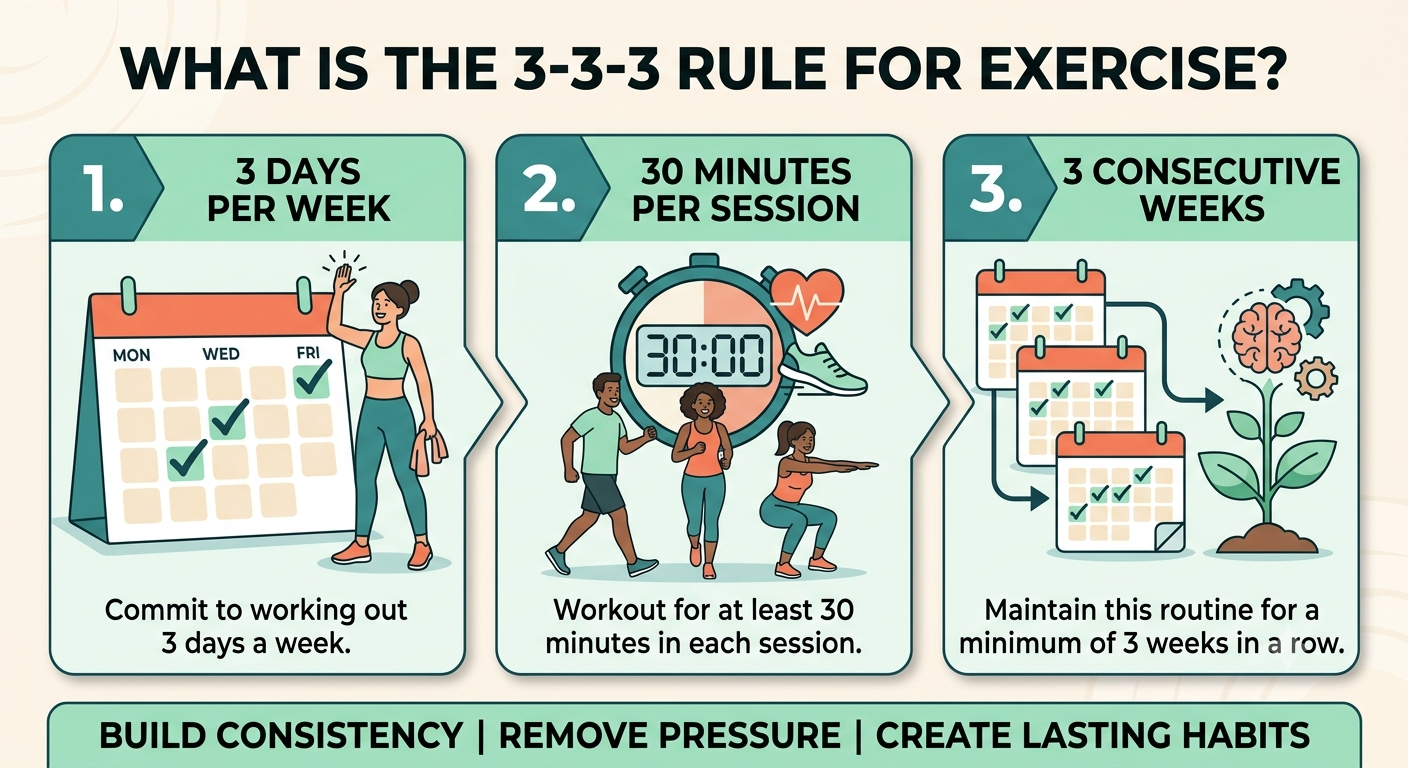
If you are struggling to find a starting point, the 3–3 rule is a fantastic, non-intimidating framework to build consistency.
The 3-3-3 Rule: Commit to working out 3 days a week, for at least 30 minutes per session, for a minimum of 3 consecutive weeks.
By narrowing your focus to just three days a week, you remove the pressure of perfection. Once you hit the 3-week mark, the routine starts to transform into an automatic habit, making it much easier to sustain over the long haul.
Moving Your Body: 7 Physical Activities to Try
You do not need a state-of-the-art gym to stay active. Here are seven accessible physical activities that can help you meet your daily movement goals:
Brisk Walking: Brisk walking is a moderate-intensity aerobic exercise in which you walk at a faster pace than normal walking.
Strength Training: Utilizing body weight, resistance bands, or free weights to preserve and build muscle mass.
Cycling: A fantastic way to build lower-body strength and stamina while being exceptionally gentle on your knees.
Yoga or Pilates: Excellent practices for improving core strength, flexibility, balance, and spatial awareness.
Swimming: A full-body workout that challenges your cardiovascular system without putting impact stress on your joints.
Dancing: Whether you take a structured class or just blast music in your living room, dancing is an astonishing way to burn calories.
Active Gardening: Never underestimate the physical demands of raking leaves, digging, and lifting soil. It absolutely counts as functional movement!
The Reward: 5 Benefits of Being Active And Fit Every Day
When you make movement a daily habit, you unlock these five life-changing benefits:
Enhanced Mood and Mental Health: Exercise triggers the release of endorphins, which act as natural mood lifters and powerful combatants against anxiety.
Improved Disease Management: Regular activity drastically lowers your risk of developing type 2 diabetes and heart disease.
Boosted Energy Levels: Expending energy through exercise actually creates more energy by improving your cellular efficiency.
Weight-bearing activities stimulate bone tissue growth, reducing the risk of osteoporosis as you age.
Sharper Cognitive Function: Physical movement increases blood flow to the brain, enhancing memory, focus, and overall cognitive sharpness.
Beyond Movement: The 5 Lifestyle Habits for Complete Fitness
Exercise is only one piece of the puzzle. To truly stay fit and active, you must support your physical movement with solid lifestyle habits.
Eat a Balanced Diet:
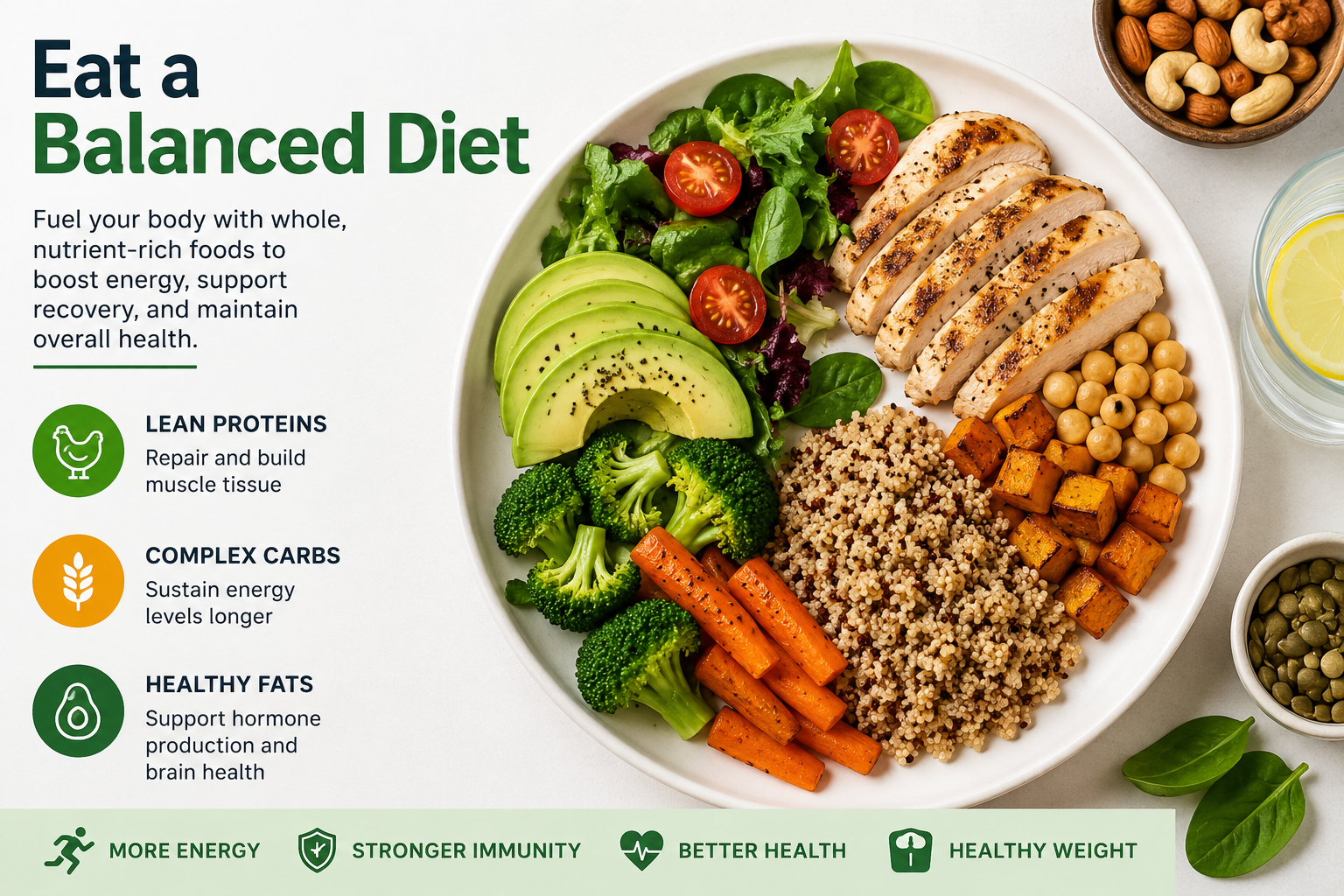
Think of food as your premium fuel source. Focus on consuming whole foods: lean proteins to repair muscle tissue, complex carbohydrates to sustain your energy levels, and healthy fats to support hormone production.
Drink Enough Water
Dehydration can lead to premature fatigue, muscle cramps, and brain fog. Keep a reusable water bottle by your side.
Get Quality Sleep.
Your body does not build muscle or burn fat while you are working out; it does so while you are sleeping. Prioritize 7 to 9 hours of uninterrupted sleep every night to allow for proper cellular repair.
Reduce Screen Time.
One of the biggest culprits of a sedentary lifestyle is the endless digital scroll. Set boundaries on your digital devices. For every hour spent looking at a screen, challenge yourself to stand up and stretch.